This new camera offers a few new features not seen on most cameras in this price range. One thing that sets this camera apart from others is its ability to take group shots (up to 4 people) without the need for anyone to hit a timer. The camera automatically detects the amount of faces it needs before taking the shot, and sets off a short timer before taking a picture. This allows you to avoid the awkward timer set / run over to the shot, which usually leads to the person running over not being in the frame. This feature actually works well, even better than expected. Additionally it takes “couple” pictures slightly differently, measuring how close the faces are to each other before taking a shot.
The camera is small, not as small as other super mini cameras, but at 0.8” thick it’s still not taking up much space. It comes in 4 color schemes; red/black, full black, pink, and silver. The sliding cover for the lens and flash is fun in concept, but moving diagonally rather than up/down or side to side makes it more awkward than fun.
For a basic small point and shoot camera the specs are fairly impressive. It’s a 10 megapixel camera, with image stabilization, and 5x optical zoom. However, the quality of pictures it takes is very lacking. Outdoor shots are clear, even though the image stabilization doesn’t work quite as well as other cameras. Indoor, or low light shots however the pictures end up fuzzy and faded, mostly because the flash blows the quality quite a bit. This really throws it off, because image quality is one of the most important things you need from a camera.
It normally goes for $300, but can be found for $270 online.
Rating 3/5
First we had to get over the whole film thing after a nation of baby boomers had been raised on Kodak, Polaroid, and 35mm film cameras of various shapes and sizes. We were all use to the idea of sending in our film for developing and waiting for our pictures to come back.
 |
Now comes the latest in technology integration. WiFi and digital cameras. No need to even plug your camera memory card into a computer, or a printer at all. Now you can buy a digital camera that transmits the images via wireless technology. Yes, that is right, a wireless connection for your image uploads.
Now, you may be among those in the population that have not even gotten their hands around the whole digital image sharing thing yet. This promising new technology may lead us to a world of fewer cables to plug in, quicker transfer of our images, and in the case of events in the world, the ability to share images of news almost instantly.
Imagine cities that implement widespread WiFi access and photographers with WiFi cameras capturing images of news and other special events. They could transmit those images right away and let the world see them.
Here is how it works:
Nikon has released two models of digital cameras that are WiFi enabled. The idea is to be able to transmit your pictures straight from the camera to your computer or printer through a wireless adaptor. You bring up the images to transfer, hit “go”, and they get sent through the air to your printer. The Coolpix P-series will be in the $200-$550 range in pricing and the adaptor is extra.
 |
Digital cameras continue to be hot sellers despite what some in the industry thought would be a slowing of sales this year. Many had predicted that cell phone cameras would slow digital camera sales, but this is not happening.
If you are a leading edge gadget buyer and have a wireless mindset then you may want to be first on the block to get one of these Wi-Fi digital cameras.
 |
Well, it really depends on your budget; however if you do spend the extra money, here's what you get:
In addition to the price falls in the Digital SLR models, the performance on these cameras has increased year on year with the latest Digital SLR cameras being quicker and faster than ever before. They have improved to such an extent that power up or start-up time is near instantaneous with virtually no lag time. “Lag time is the time between you pressing the shutter release button and the camera actually taking the shot”. This delay can vary quite a bit between different camera models and it is one of the biggest drawbacks compared to a compact digital camera. The latest digital SLR cameras have virtually no lag times and react in the same way as conventional film cameras, even in burst mode. Compact digital cameras are catching up; however the difference is still significant. A lag time of ~0.5 seconds can result in you missing the heartbeat of the moment and hence that potential great picture.
 |
The Digital SLR cameras have a much longer battery life due to the limited use of the LCD screen. Please note, that as the LCD screen is only used for viewing the image, the battery life of a digital SLR can allow up to 2000 shots per charge in some cameras compared to 500 for a good point and shoot digital camera.
Digital SLR cameras also allow you to interchange lens such as adding a zoom or macro lens when required.
On the negative side of a Digital SLR camera; they are usually larger and heavier than compact digital cameras, the image cannot be previewed on the LCD screen prior taking the picture. If you really require the image to be viewed on the LCD prior to taking the picture, there are third party manufacturers that produce LCD screens that attaches to the viewfinder and allow the scene to be view just like a compact digital camera. The other drawback is the inability to take videos and finally, lenses are expensive with the majority costing more than the camera itself.
Although compact digital cameras cannot compete on features with a Digital SLR camera, they are great value, have the ability to take videos and are portable. If you have decided to purchase a Digital SLR camera I recommend you visit other websites which has Information on Digital Camera and compare the features. If you are still undecided, purchase both.
I recently purchased a Gary Fong Lightsphere for about $50 after reading a lot of hype about it on various photography message boards. I needed a good universal flash diffuser for my 580 EXII anyway so I went ahead and bought one. When it came in I was amazed at how simple this device was. It’s essentially a rubberized bowl with a plastic lid (optional) for extra diffusing. My first reaction was, “I bet there are imitations all over eBay for these!” Sure enough, eBay is filled with low-cost replicas.
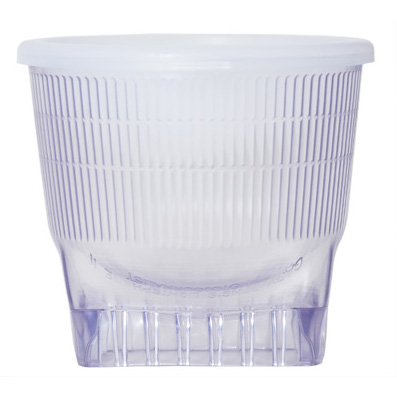
As your tech review source, I decided it was my duty to get one of these and compare. I will be posting up a full review with sample pictures but let me give you the short. Nothing earth shattering here. The eBay clones are exact copies of this very simple device and so the resultant performance is identical. My advice, save yourself $40+ and get one of these sub $10 copies.
http://dan.ponjican.com/gary-fong-lightsphere-cheap-alternative.html
The one I picked up even came with an extra amber dome for added warmth effect. Can’t beat that!
A couple things inspired me as of late to experiment with some Photography equipment and led me to this great little DIY photography trick. It seems to be the rage on all the photography boards so I figured I would give it a shot aswell.
The other inspirer was my latest acquisition; a new Canon Speedite 580EX II flash. This is Canon's latest and greatest model designed to be used with the EOS digital SLR range of camera bodies.

At $400.00 (street price) these are a great value for any hobbyist or professional photographer. I had the opportunity to initially test it at a local charity event and was instantly impressed with the power and versatility of this flash (full review coming soon...).
On to our little experiment. Today we are looking at home-made DIY photography light boxes. These are great tools to have for any photography taking macro shots of single products/object. In my case the need arose from pictures taken of new products for one of my ecommerce sites (http://www.DetailingGurus.com/). I frequently need to get new pictures of new products being added to the store's website. Anyone who has taken pictures for web store fronts knows that it is a challenging task to keep the lightings and environment consistent between your shots. A light box is your answer.
We built our light box from a medium sized scrap cardboard box. I started out by cutting two 10" X 16" rectangle cutouts from the left and right sides of the box. I taped a sheet of 11" x 17" plain white copy paper over these "windows" on each side of the box.
Next I used white packaging paper to line the insides of the box to create good light diffusing surfaces. Finally, "drape" of white paper was curved to create a gentle, non-creasing background.
I used as much lighting as I could find around the house. Optimally, I would use two of the portable halogen lights like I have on the left side of this box setup. I didn't have a second light like this (I will pick one more up this week and shoot some more shots) so I used a regular lamp with the shade removed.

I shot these in auto mode with my 580EX II set to ETTL mode. Most of the shots were taken with a Canon F1.8 55mm lense. I used a Gary Fong Lightsphere as a difuser on the flash and set the flash at 45 degrees bouncing the light off of the top inside ceiling of the box.
Here are some sample shots.
Edge Industrial Adapter


Microfiber towel

SYSTEM ONE X3 Polish

Kit Lens


